If you’ve been arrested, one of the first questions you probably have is,
“What happens next?”
Many people have never been inside a courtroom before. Their understanding of the criminal justice system comes from television shows or movies. Unfortunately, Hollywood often gets it wrong.
One of the best examples is the movie
My Cousin Vinny. Shortly after arriving in town, Vinny walks into court at the defendants’ arraignment and immediately begins arguing the facts of the case. While it makes for great entertainment, that is generally
not how criminal cases work in California.
In reality, a criminal case moves through several important stages, each serving a different purpose. Understanding those stages can help you know what to expect and why having an experienced criminal defense attorney matters.
Stage One: The Arraignment
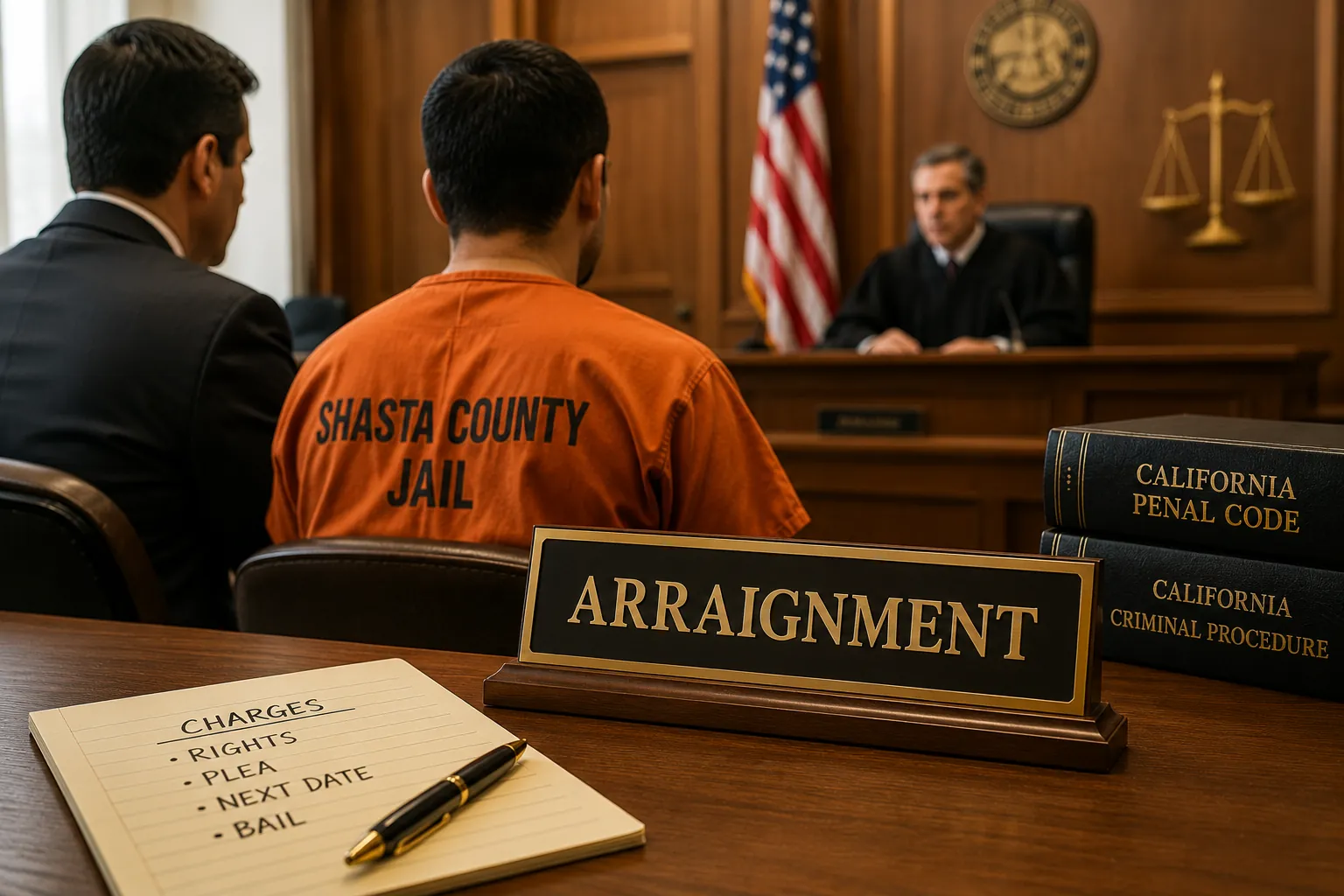
The arraignment is usually your first appearance before a judge after criminal charges have been filed.
Many clients expect this to be the day their attorney proves their innocence.
It’s not.
Instead, the arraignment is primarily a
procedural hearing.
During the arraignment, the court generally:
Advises you of the charges.
Advises you of your constitutional rights.
Determines whether you have an attorney.
Addresses bail or custody issues.
Sets future court dates.
Accepts a plea, which is almost always “Not Guilty” at this stage.
One of the most common misconceptions is that the defense begins presenting witnesses and arguing the facts at the arraignment.
Generally speaking, that does not happen.
There are occasional exceptions. For example, in rare situations, a defense attorney may ask the court to dismiss a case in the interests of justice through a motion under Penal Code section 1385 or raise another issue that can be addressed immediately. Those situations are the exception, not the rule.
Most criminal cases simply are not ready for factual arguments at the arraignment because the defense has not yet received all of the evidence.
Criminal defense is not simply about making persuasive arguments.
It is about knowing
when to make those arguments.
An experienced criminal defense attorney understands when to challenge the evidence, when to cross-examine witnesses, when to file motions, when to negotiate, and when to present the strongest defense at trial.
Every stage of a criminal case presents opportunities—and risks. Knowing how to use each stage effectively can make a substantial difference in the outcome of your case.
Looking for a Criminal Defense Attorney in Redding or Shasta County?
If you or someone you love is facing criminal charges, understanding the process is the first step. Having an experienced criminal defense attorney guide you through each stage—from arraignment through trial, if necessary—can help protect your rights and ensure that every opportunity to defend your case is fully explored.
At Jacob Levin Law, we represent clients throughout Redding, Shasta County, and Northern California in misdemeanor and felony cases. Whether your case is just beginning or is already set for trial, we are prepared to help you navigate every stage of the criminal justice process.
What Happens After You’re Arrested in Shasta County? A Step-by-Step Guide
Being arrested is frightening. For most people, it is their first experience with the criminal justice system, and they have no idea what comes next.
Questions immediately begin racing through their minds.
“Am I going to jail?”
“When will I see a judge?”
“Will I have a criminal record forever?”
“Should I talk to the police?”
If you or a loved one has been arrested in Shasta County, understanding the criminal court process can help reduce uncertainty and allow you to make informed decisions. Although every case is different, most criminal cases follow the same general path.
Step 1: The Arrest
A criminal case usually begins when someone is arrested by a law enforcement agency such as the Shasta County Sheriff’s Office, the Redding Police Department, the Anderson Police Department, the California Highway Patrol, or another agency.
An arrest does
not mean you have been convicted of a crime.
It means law enforcement believes there is probable cause to believe a crime has been committed.
At this point, one of the most important things you can do is remain silent and request an attorney.
Many cases become more difficult because people try to explain themselves before speaking with a lawyer.
Step 2: Booking into Jail
After an arrest, many individuals are transported to the Shasta County Jail for booking.
During booking, officers generally:
Record personal information.
Take fingerprints and photographs.
Inventory personal property.
Complete booking paperwork.
Determine whether the person will remain in custody or be eligible for release.
Depending on the circumstances, some people are released shortly after booking, while others remain in custody until they appear before a judge.
Step 3: The Prosecutor Reviews the Case
Contrary to what many people believe, an arrest does not automatically mean criminal charges will be filed.
The District Attorney reviews the available evidence and decides whether criminal charges should be filed and, if so, what charges are appropriate.
Sometimes charges are reduced.
Sometimes additional investigation is requested.
Sometimes no charges are filed at all.
This is one reason why obtaining legal representation early can be extremely important.
Step 4: The Arraignment
The arraignment is usually the defendant’s first court appearance.
At the arraignment, the court generally:
Advises the defendant of the charges.
Advises the defendant of their constitutional rights.
Addresses custody status or bail.
Sets future court dates.
Many people believe they need to explain their side of the story to the judge at arraignment.
They do not.
The arraignment is primarily a procedural hearing.
Step 5: Discovery
After charges are filed, the prosecution must provide the defense with discovery.
Discovery may include:
Police reports
Body camera footage
Dash camera videos
Witness statements
Photographs
Laboratory reports
Medical records
911 recordings
Expert reports
An experienced defense attorney carefully reviews this evidence to identify inconsistencies, constitutional issues, missing evidence, and potential defenses.
Step 6: Investigation by the Defense
While the prosecution is building its case, the defense should be building its own.
This may include:
Interviewing witnesses.
Obtaining surveillance footage.
Gathering photographs.
Consulting experts.
Visiting the scene.
Reviewing digital evidence.
Researching legal issues.
Many of the strongest defenses come from evidence the police never collected.
Step 7: Pretrial Hearings
Most criminal cases involve several court appearances before trial.
During these hearings, attorneys may:
Exchange additional discovery.
File legal motions.
Negotiate possible resolutions.
Address evidentiary issues.
Schedule future proceedings.
Many cases are resolved during this stage.
Others continue toward trial.
Step 8: The Preliminary Hearing (Felony Cases)
In most felony cases, the defendant has the right to a preliminary hearing.
At this hearing, the prosecution must present enough evidence to establish probable cause that:
A crime was committed; and
The defendant committed it.
The preliminary hearing also provides the defense with an important opportunity to cross-examine witnesses under oath, preserve testimony, and evaluate the strengths and weaknesses of the prosecution’s case.
Step 9: Trial
If the case cannot be resolved, it proceeds to trial.
At trial:
The prosecution presents evidence first.
The defense has the opportunity to cross-examine every witness.
The defense may present evidence but is not required to do so.
The defendant is presumed innocent throughout the trial.
The prosecution bears the burden of proving guilt beyond a reasonable doubt.
That burden never shifts.
A defendant does not have to prove innocence.
Step 10: Sentencing (If Necessary)
If a defendant is convicted or enters a plea, the court schedules sentencing.
Depending on the offense, sentencing may include:
Probation
Jail
Prison
Fines
Counseling
Community service
Other court-ordered conditions
The appropriate sentence depends on the charges, criminal history, applicable sentencing laws, and the specific facts of the case.
Every Case Is Different
No two criminal cases are exactly alike.
Some cases are dismissed shortly after filing.
Others resolve through negotiated agreements.
Some proceed through preliminary hearings and motions before ultimately being dismissed or reduced.
Others go all the way to trial.
The right strategy depends on the evidence, the applicable law, and the facts unique to each case.
Why Hiring a Criminal Defense Attorney Early Matters
One of the biggest mistakes people make is waiting until weeks—or even months—after their arrest to hire an attorney.
By that point:
Witnesses may have disappeared.
Surveillance footage may have been deleted.
Physical evidence may be lost.
Important legal deadlines may have passed.
Early representation allows the defense to begin protecting your rights immediately rather than simply reacting to the prosecution’s case.
Arrested in Shasta County? Know Your Rights.
An arrest is only the beginning of the legal process—not the end of it.
The prosecution still has the burden of proving every element of every charge beyond a reasonable doubt.
If you or someone you love has been arrested in Shasta County, understanding the process is the first step. Having an experienced criminal defense attorney guide you through that process can help protect your rights at every stage, from the initial investigation through trial if necessary.
10 Reasons to Fight a Restraining Order in California
Many people make the mistake of thinking that because a restraining order is a civil matter, it is not as serious as a criminal case.
Nothing could be further from the truth.
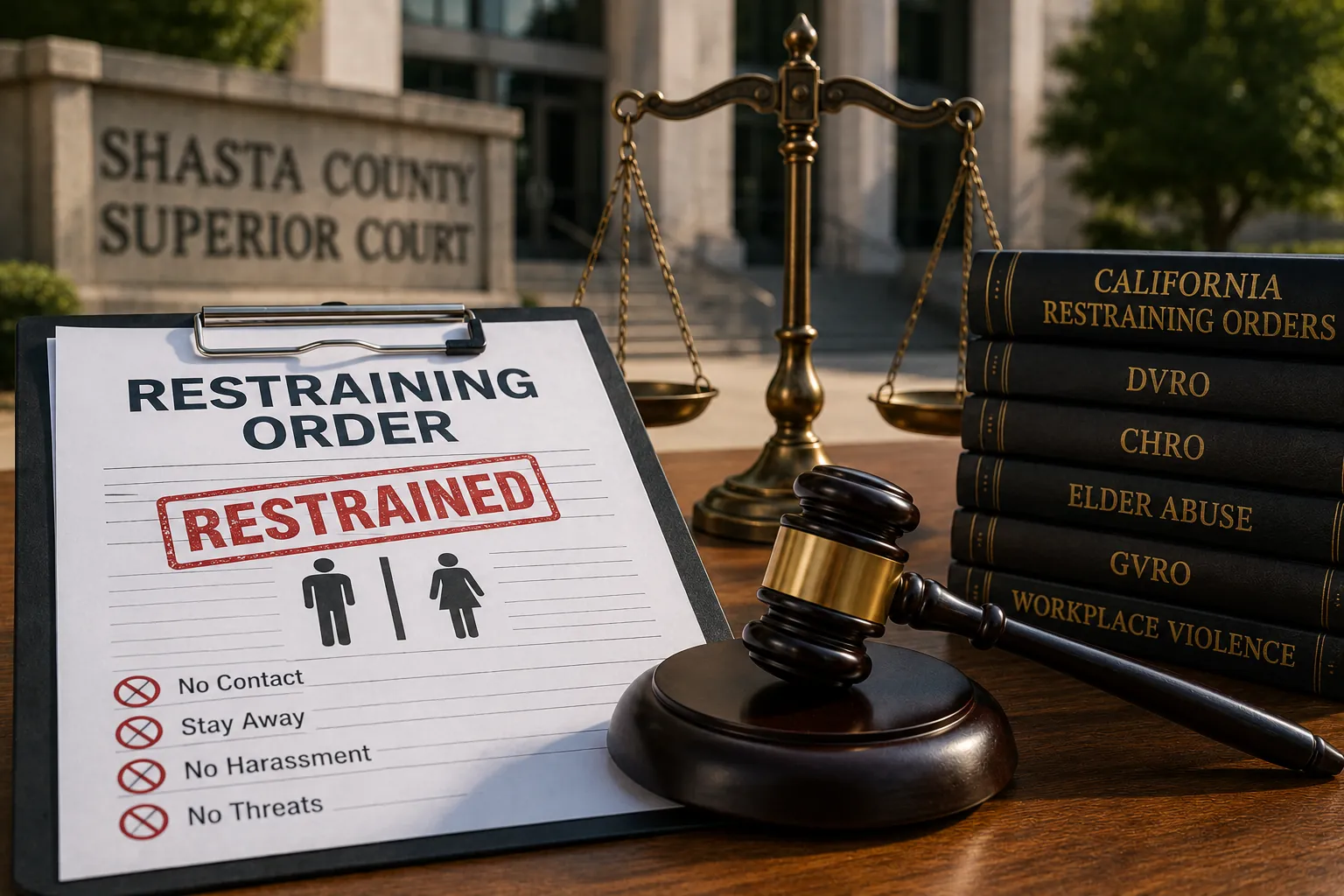
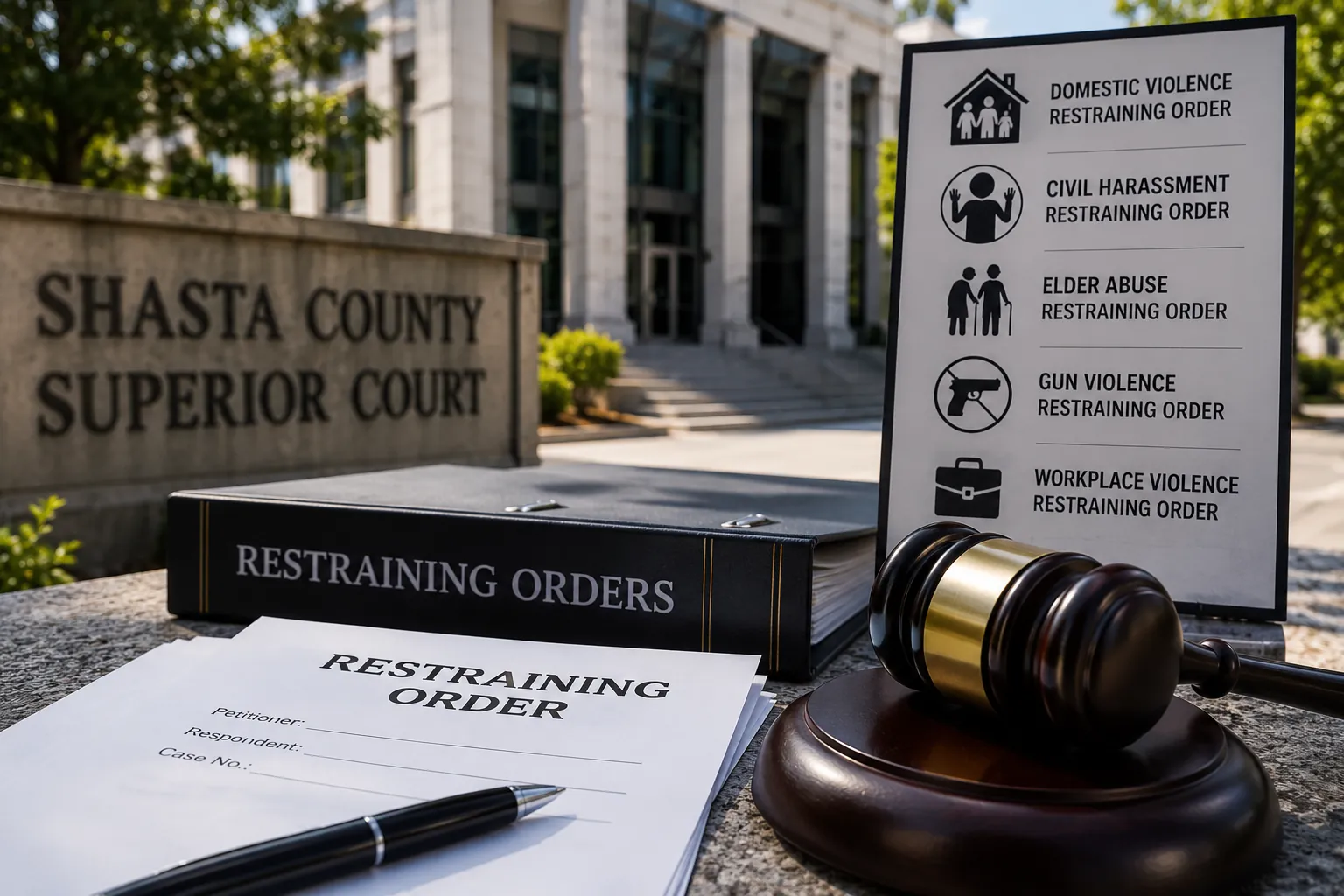
Whether you are facing a Domestic Violence Restraining Order (DVRO), Civil Harassment Restraining Order (CHRO), Elder Abuse Restraining Order, or others, the consequences can be severe and long-lasting.
If you have been served with a restraining order in Shasta County or anywhere in California, here are ten important reasons why you should seriously consider fighting it.
1. You Lose Your Gun Rights
Once a temporary restraining order is issued, California law requires you to surrender any firearms you own or possess within 48 hours.
If you successfully defend against the restraining order, you will be eligible to have your firearms returned, subject to California’s applicable waiting periods and legal requirements.
If a permanent restraining order is issued, however, you can lose your right to possess firearms for the duration of the order—which may be as long as five years. In some cases, the protected party may later seek to renew the restraining order, extending those restrictions even longer.
2. Your Freedom of Movement Can Be Restricted
Before the restraining order, you could generally go wherever you wished.
Afterward, you may have to constantly avoid places where the protected person might be present, including grocery stores, restaurants, sporting events, children’s activities, shopping centers, and other public places.
Even accidental encounters can create difficult situations and may expose you to allegations that you violated the restraining order.
Successfully defeating the restraining order restores your freedom to live your life without those restrictions.
3. It Can Affect Child Custody
If a Domestic Violence Restraining Order is issued against you, California Family Code section 3044 creates a rebuttable presumption that awarding you custody of your children is not in their best interests.
While that presumption can sometimes be overcome, it creates a significant obstacle in custody litigation.
Successfully defeating the restraining order may prevent that presumption from arising in the first place.
4. It Can Affect Spousal Support
In some divorce proceedings, a domestic violence restraining order can influence whether one spouse is entitled to receive spousal support.
What happens in a restraining order case today can have lasting consequences in future family law proceedings.
5. It Can Be Used Against You in Future Court Proceedings
A restraining order does not exist in isolation.
It may later become an issue in family court, civil litigation, employment matters, professional licensing proceedings, or other legal disputes.
Winning your restraining order hearing may prevent those future consequences.
6. It May Encourage Additional Legal Claims
Unfortunately, when one restraining order is granted, it can sometimes embolden others to file similar petitions or make additional allegations.
Successfully defending yourself sends a very different message than allowing unsupported allegations to become court orders.
7. It May Increase the Risk of Criminal Charges
Although restraining order proceedings are civil in nature, the evidence presented during those hearings may sometimes be reviewed by law enforcement or prosecutors.
Depending on the circumstances, allegations made in a restraining order case can contribute to a criminal investigation.
8. Winning Can Strengthen Your Position
The burden of proof in many restraining order proceedings is lower than the burden of proof in a criminal case.
If a judge determines that the petitioner has failed to meet even that lower burden, it may significantly strengthen your position if criminal allegations are later considered.
Every case is different, but prevailing at the restraining order hearing can be an important first step.
9. Losing Can Lead to New Criminal Charges
Violating a restraining order can be prosecuted as a criminal offense.
That means a civil restraining order can become the basis for misdemeanor—or, in some circumstances, felony—criminal charges if the order is later violated.
The best way to avoid violating a restraining order is to successfully defend against one that should never have been issued.
10. A Restraining Order Can Affect Your Future
A restraining order can have consequences far beyond the courtroom.
It may affect:
Employment opportunities
Professional licenses
Housing applications
Security clearances
Background checks
Your personal and professional reputation
For many people, these long-term consequences are every bit as serious as the court hearing itself.
Don’t Assume You Have No Defense
Every restraining order case is different. The petitioner has the burden of proving the legal requirements for the particular type of restraining order they are seeking. In many cases, there are factual disputes, credibility issues, evidentiary objections, or legal defenses that can make the difference between winning and losing.
If you have been served with a restraining order in Shasta County or anywhere in Northern California, do not assume the outcome is predetermined. An experienced restraining order attorney can evaluate the evidence, identify weaknesses in the petitioner’s case, and develop a strategy tailored to the specific type of restraining order involved.
The consequences of a restraining order can last for years. The decision to fight it may affect the rest of your future.
What standard of proof applies, and why that matters
Not All Restraining Orders Are the Same: Understanding the Different Types of California Restraining Orders
Many people are surprised to learn that there is no such thing as a single “restraining order.”
California law recognizes several different types of restraining orders, each created for a different purpose. Although they may appear similar on the surface, they are governed by different statutes, involve different legal standards, have different evidentiary rules, and often require different litigation strategies.
These differences are not merely technical. They can determine what evidence the judge may consider, what the petitioner must prove, and ultimately whether a restraining order is granted or denied.
If you are involved in a restraining order case in Shasta County, understanding these distinctions—and working with an attorney who understands them—can make all the difference.
The Five Most Common Types of Restraining Orders:
Domestic Violence Restraining Orders (DVRO)
A Domestic Violence Restraining Order is designed to protect individuals who have a qualifying relationship with the respondent, such as:
A current or former spouse
Someone you have dated
A person with whom you share a child
A close family member
Someone with whom you currently or previously lived in a qualifying domestic relationship
Because these cases arise out of domestic relationships, the law governing them is different from other restraining orders.
One significant difference is the burden of proof. Generally speaking, a Domestic Violence Restraining Order is decided under the
preponderance of the evidence standard. In other words, the petitioner must persuade the court that it is more likely than not that the alleged abuse occurred.
Domestic violence proceedings are also governed by their own evidentiary rules. For example, hearsay evidence that may be admissible in another type of restraining order proceeding may not necessarily be admissible in a DVRO hearing. Knowing when to object—and when not to—is often critical.
Civil Harassment Restraining Orders (CHRO)
Civil Harassment Restraining Orders apply when the parties do
not have the type of close relationship required for a DVRO.
These cases often involve:
Neighbors
Former friends
Acquaintances
Strangers
Coworkers (outside the workplace violence statutes)
Although many people assume these cases operate exactly like domestic violence restraining orders, they do not.
For example, Civil Harassment cases generally require proof by
clear and convincing evidence, a higher burden of proof than the preponderance standard applicable in domestic violence cases.
The evidentiary rules are also different. California law permits the court to receive certain hearsay evidence in Civil Harassment proceedings. Understanding how to admit—or challenge—that evidence can significantly affect the outcome of the hearing.
Elder Abuse Restraining Orders
California provides special protections for elders and dependent adults who are victims of abuse, neglect, abandonment, financial exploitation, or other forms of mistreatment.
These cases often involve complicated family relationships, caregivers, conservatorships, financial disputes, or allegations of undue influence.
Because elder abuse cases frequently involve medical records, financial documents, and caregiving arrangements, they often require careful preparation and a detailed understanding of the governing statutes.
Gun Violence Restraining Orders (GVRO)
Gun Violence Restraining Orders are unique because they focus primarily on whether an individual poses a significant danger of causing personal injury by possessing or accessing firearms.
These proceedings may be initiated under circumstances involving allegations of threats, concerning behavior, or escalating violence.
Unlike many other restraining orders, the principal consequence is often the temporary surrender or prohibition of firearms and ammunition.
Because these cases involve both constitutional rights and public safety concerns, they require careful attention to the specific statutory requirements governing Gun Violence Restraining Orders.
Workplace Violence Restraining Orders
A Workplace Violence Restraining Order differs from every other restraining order because the employer—not the individual employee—typically files the petition.
These cases are intended to protect employees who have experienced violence, threats of violence, or credible threats occurring in connection with the workplace.
Determining whether the legal requirements have been satisfied often requires careful analysis of the alleged conduct, the employment relationship, and whether the statutory elements have been established.
Why These Differences Matter
Many people mistakenly believe that if they have handled one restraining order, they understand them all.
That simply is not the case.
Imagine two hearings involving nearly identical facts.
In one courtroom, the judge is deciding a Domestic Violence Restraining Order under the
preponderance of the evidence standard.
In the next courtroom, the judge is deciding a Civil Harassment Restraining Order under the
clear and convincing evidence standard.
The evidence required to prevail may be different.
The objections available may be different.
The strategy may be different.
Even the way witnesses are questioned may be different.
An attorney who approaches every restraining order as though the rules are identical risks overlooking important legal issues that could affect the outcome of the case.
Local Experience Matters in Shasta County
In addition to understanding California’s restraining order statutes, it is equally important to understand how these cases are handled in the local courts.
Every county develops its own procedures, scheduling practices, and courtroom customs. Attorneys who regularly appear in Shasta County become familiar with those local practices and understand how to efficiently prepare cases for hearing.
While every judge decides each case independently and based on the law and evidence presented, familiarity with local procedures, filing requirements, courtroom expectations, and evidentiary issues can help ensure that your case is presented as effectively as possible.
Why Experience Matters
Restraining order hearings often move quickly. In a single hearing, the court may be asked to decide disputed facts, rule on evidentiary objections, determine witness credibility, and issue orders that can remain in effect for years.
These proceedings can affect:
Your ability to possess firearms.
Child custody and visitation.
Employment opportunities.
Professional licenses.
Housing.
Your reputation.
Future court proceedings.
Because every type of restraining order has its own legal framework, it is important to work with an attorney who understands not only restraining order litigation generally, but the unique rules governing the specific type of restraining order involved in your case.
Jacob Levin Law – Representing Clients in Restraining Order Cases Throughout Shasta County
Whether you are seeking protection or defending against a restraining order, understanding the specific type of restraining order at issue is critical. The applicable burden of proof, the evidentiary rules, and the governing statutes may be very different depending on the type of case before the court.
At Jacob Levin Law, we represent both petitioners and respondents in Domestic Violence, Civil Harassment, Elder Abuse, Gun Violence, and Workplace Violence restraining order proceedings throughout Shasta County and Northern California. Our goal is to ensure that every case is prepared with a thorough understanding of the law, the evidence, and the procedures that apply to that particular type of restraining order—not simply with a one-size-fits-all approach.
This post can be the difference between a conviction and an acquittal
What Should I Do If I (or a Loved One) Was Arrested in Shasta County?
Being arrested is one of the most overwhelming experiences a person can face. Whether the arrest happened in Redding, Anderson, Shasta Lake, or anywhere else in Shasta County, it is natural to feel scared, confused, and unsure of what comes next.
The good news is that an arrest is
not a conviction. At this stage, the prosecution has simply made an accusation. What you do in the hours and days following the arrest can have a significant impact on your case.
If you or a loved one has been arrested in Shasta County, these are the three most important things you should do.
1. Exercise Your Right to Remain Silent
Many people make the mistake of believing that if they simply explain what happened, the police will realize there has been a misunderstanding and let them go.
Unfortunately, that is rarely how criminal investigations work.
Police officers are trained to gather evidence. Once they suspect someone of committing a crime, their questions are often designed to obtain admissions, identify inconsistencies, or gather additional evidence. Even completely innocent people can unintentionally make statements that later appear suspicious or inconsistent.
People often speak while they are frightened, exhausted, emotional, intoxicated, or simply trying to be helpful. Human memory is imperfect, particularly during stressful events. A minor mistake or inaccurate estimate of time, distance, or sequence can later be portrayed as a lie.
For that reason, one of the strongest protections guaranteed by the Constitution is the right to remain silent.
If officers attempt to question you, calmly and respectfully say:
“I am respectfully exercising my right to remain silent. I would like to speak with an attorney, please.”
Once you invoke that right, stop talking about the facts of your case.
Do not try to explain yourself.
Do not try to convince officers that you are innocent.
Do not answer “just one more question.”
Remaining silent is not an admission of guilt. It is simply exercising a constitutional right that exists to protect everyone—including innocent people.
2. Do Not Consent to Searches
After an arrest, officers may ask for permission to search your vehicle, home, cell phone, computer, backpack, or other personal property.
Many people feel pressured to say yes because they believe refusing consent will make them appear guilty.
It does not.
The Fourth Amendment protects individuals against unreasonable searches and seizures. While there are many situations in which officers may lawfully conduct a search without your consent, there are also many situations where your consent becomes the legal basis for that search.
If an officer asks for permission to search, you can politely say:
“I do not consent to any searches.”
That is all you need to say.
Do not argue.
Do not physically resist.
Do not interfere with the officers if they search anyway.
Simply make it clear that you are
not giving permission. If the legality of the search later becomes an issue, your attorney may be able to challenge whether the evidence was lawfully obtained. By refusing consent, you preserve that issue rather than eliminating it.
3. Contact a Shasta County Criminal Defense Lawyer as Soon as Possible
One of the biggest mistakes people make is waiting days—or even weeks—to hire an attorney because they assume nothing important will happen before their first court date.
In reality, some of the most important work in a criminal case happens immediately after an arrest.
The sooner a defense attorney becomes involved, the sooner steps can be taken to preserve evidence and begin building your defense.
An attorney may be able to:
Obtain police reports and other discovery as they become available.
Identify legal issues involving searches, seizures, or interrogations.
Locate and interview witnesses before memories fade.
Preserve surveillance video before it is automatically erased.
Gather favorable evidence that law enforcement may have overlooked.
Advise you before you make decisions that could affect your case.
Represent you at arraignment and throughout every stage of your case.
Begin discussions with the prosecutor when appropriate.
Every criminal case is different, but one thing is consistent:
waiting rarely helps the defense.
A Final Thought
If you or someone you love has been arrested in Shasta County, remember that
an arrest is not the same as a conviction. The prosecution bears the burden of proving every element of every charge beyond a reasonable doubt.
The decisions you make immediately after an arrest matter. By exercising your right to remain silent, refusing consent to unnecessary searches, and contacting an experienced criminal defense attorney as soon as possible, you put yourself in the strongest possible position to protect your rights and your future.
At
Jacob Levin Law, we represent clients throughout Shasta County facing misdemeanor and felony charges. If you or a loved one has been arrested, we are prepared to begin protecting your rights from the very beginning of the case.
Being served with a restraining order can be alarming. For many individuals, it is their first experience with the legal system, and the allegations contained in the petition may be unexpected, exaggerated, or entirely false. Regardless of the underlying facts, you should understand one critical point:
being served with a Temporary Restraining Order (“TRO”) is not a finding that you committed the alleged conduct.
In most cases, the court issues a temporary order based solely upon the petitioner’s written allegations. The judge has not yet heard your testimony, reviewed your evidence, or determined the credibility of either party. The purpose of the upcoming hearing is to decide whether a longer-term restraining order should issue after both sides have had an opportunity to present evidence.
What you do between the date you are served and the hearing can have a substantial impact on the outcome of your case. The following are several important steps every respondent should take immediately after being served.
1. Carefully Review Every Document You Were Served With
Do not assume that the first page tells you everything you need to know.
Read every document carefully, including the petition, the temporary restraining order, any attachments, and the notice of hearing. Pay particular attention to:
The date, time, and location of the hearing.
The specific allegations being made against you.
The temporary restrictions that are already in effect.
Any stay-away, residence exclusion, or no-contact provisions.
Any orders requiring the surrender of firearms or ammunition.
Deadlines for filing a written response.
Many respondents inadvertently violate court orders simply because they failed to read them carefully. Before taking any action, you should have a complete understanding of exactly what the court has ordered.
2. Strictly Comply With the Temporary Orders
Even if you believe the allegations are demonstrably false, you must comply with the temporary orders until they are modified or dissolved by the court.
Attempting to contact the protected person—even for the purpose of resolving the dispute, apologizing, explaining your side of the story, or responding to their communications—may expose you to allegations that you violated the court’s order.
Courts generally expect strict compliance with restraining orders. A violation can create additional legal exposure and may significantly complicate your defense at the hearing.
3. Preserve All Potential Evidence
Restraining order proceedings are frequently decided on credibility. As a result, documentary evidence often becomes critically important.
Immediately preserve any evidence that may support your position, including:
Text messages and emails.
Social media communications.
Photographs and videos.
Telephone records.
Security camera footage.
GPS or location data.
Witness names and contact information.
Do not alter, edit, or selectively delete communications. Preserving the original evidence in its entirety is generally the best practice.
4. Prepare a Detailed Chronology of Events
As soon as practicable, prepare a written timeline while the events remain fresh in your memory.
Include the dates, times, locations, individuals present, and a detailed description of each significant interaction. Seemingly minor details often become important during cross-examination or when comparing testimony to documentary evidence.
A well-prepared chronology also allows your attorney to identify inconsistencies, locate corroborating evidence, and prepare your defense more effectively.
5. Appreciate the Serious Consequences of a Permanent Restraining Order
Some individuals mistakenly assume that restraining order proceedings are minor civil matters. They are not.
Depending upon the type of restraining order at issue, a permanent order may affect your firearm rights, employment opportunities, professional licensing, housing, child custody proceedings, immigration status, and public record.
For that reason, restraining order hearings should be approached with the same level of preparation and seriousness as any other significant court proceeding.
6. Consult With an Attorney as Early as Possible
Time is often limited between service of the petition and the hearing date.
Early involvement by counsel allows sufficient time to analyze the allegations, identify legal issues, gather evidence, interview witnesses, prepare declarations when appropriate, and develop an effective litigation strategy.
Many of the strongest defenses are substantially more difficult to present if preparation does not begin until shortly before the hearing.
Conclusion
Being served with a restraining order does not mean you have lost your case. It means only that allegations have been made and that the court has scheduled a hearing to determine whether those allegations have been proven by the applicable legal standard.
Your objective between now and the hearing should be straightforward: comply fully with the temporary orders, preserve all available evidence, prepare thoroughly, and present a well-organized defense supported by credible testimony and admissible evidence.
An experienced attorney can help ensure that your side of the case is presented effectively and that the court has the information necessary to make a fair and informed decision.